
Most pregnant people are worried about this, and who can blame them? So let’s delve into what’s going on down there in labour and birth, why you might tear, and how you can reduce the chances of it happening…
Why do women tear in labour?
During childbirth, many women experience tears to the perineum (that little bit of skin between your anus to the entrance of your vagina). This happens because, as the baby’s head makes its way down and out, it puts a lot of pressure on the area. The skin has to stretch a lot, and sometimes, there’s a tear.
But people who imagine it’s like ‘pushing a watermelon out of a hole the size of a grape’ are completely and utterly wrong. It’s not, because it’s not a hole the size of a grape once you’re nearing the end of labour! That hole is designed to get bigger so your baby can come out of it. And the skin around it (the perineum) is a super-stretchy part of your body that is designed to stretch like it’s never stretched before. So, whilst a small tear is common, it’s by no means inevitable.
What’s it feel like to tear in labour?
I don’t know. And I am someone who did tear in labour! Take from that some reassurance as I didn’t even notice. I am also someone who has read a lot of birth stories. Many of the birth stories I have read say things like “then the midwife examined me and told me I had a tear,” but none that I have ever read say things like “then I felt myself tear”. I am not saying nobody has ever felt it, but I do think it’s more common to find out afterwards than to notice at the time. Again, I hope this is reassuring.
Tears can vary in severity and are categorised by the medical folks as either 1st, 2nd, 3rd, or 4th degree tears – with 1st being the least serious. 1st and 2nd degree tears and are common and if they occur, your midwife can decide whether or not you need stitches, and if you do, she can do it for you at home or on the birth centre, if that’s where you gave birth. Usually they offer a bit of numbing cream so the experience is uncomfortable/annoying rather than painful. For 3rd and 4th degree tears you would need some more specialist treatment and so an obstetrician (doctor) would treat you in a hospital.
How long does it take to recover from a tear in labour?
The good news is that if your perineum does tear, it’s an incredibly healable bit of the body! What I mean is, it heals way better, and way faster than any other part of your body would. Some experts are so impressed by the speedy healing abilities of the perineum that they think maybe minor tearing is just part of the natural birth process, rather than something that’s gone ‘wrong’.
Recovery times vary but if have a 1st or 2nd degree tear, the recovery time is likely to be 1-2 weeks. If you have a 3rd or 4th degree tear, it can take longer, more like 4-6 weeks. In either case, the advice is to rest (so it has chance to heal) and keep the area clean (to avoid infection). Make sure you keep up to date with appointments to see your medical care providers (your midwives, your health visitor, your GP and possibly your women’s health physio) and keep getting it looked at if you’re at all concerned.
So, we’ve established that minor tears are pretty normal, perhaps even part of nature’s amazing design, and not too bad to recover from. Still, it’s wise to look at ways to avoid them, or keep the tears as small as possible. Here’s what I’d do if I wanted to avoid tearing in labour…
How can I prevent a tear in labour?
Here are my top tips for preventing tearing in labour:
1. Perineal Massage
If the word ‘massage’ is conjuring up images of spa weekends and blissful relaxation, lower your expectations! Whilst this is possibly the least enjoyable massage out there, there is a logical argument for considering it, so let’s look at why…
Perineal massage is basically stretching the skin a little bit before the day you give birth, with the aim of increasing it’s elasticity, so that it’s more likely to stretch and less likely to tear in labour. I guess, if I needed to do the splits in 3 weeks time I would be wise to start practising it daily from now!
When do I start Perineal massage? Start perineal massage from 36 weeks and do it daily or a few times a week.
Wash your Hands: Before starting, make sure your hands are clean and nails are trimmed (for obvious reasons!)
Get comfy: You can lie on your back with your knees bent, or sit in a comfortable position, like in the shower or on the edge of the bed. Doing it in the bath may feel good to, and will make the skin more stretchy!
Use Lubrication: Use a natural oil or lubricant, such as olive oil, coconut oil, or a specially made perineal massage oil (though these are expensive and offer no benefits compared to the standard coconut/olive oil from your kitchen!)
Massage Technique:
- Put your thumbs inside your vagina, about 2.5cm to 4cm.
- Find the back wall of your vagina and press down towards your anus and to the sides. You will feel a stretch (not so much that it hurts).
- Hold this stretch for one minute whilst practising your hypnobirthing calm breathing technique.
- Next, gently massage the lower back wall of your vagina in a U shape for 2-3 minutes, whilst breathing deeply and calmly. Do this 2 or 3 times.
Repeat daily or whenever possible. After a couple of weeks you will start to notice more elasticity down there.
2. Don’t push – breathe

Most people think having a baby involves consciously pushing, chin to chest, straining and holding your breath. This is not how nature designed birth, and if preventing a tear is high on your agenda, you’re going to want to think ‘slow and steady’ rather than ‘push it out’ during this final stage of labour.
In a healthy, normal birth, your baby is going to come out. You don’t actually need to try as hard as these silly images of women lying on their back being yelled at to “push!” have us believe.
When you baby’s head starts to emerge, it’s called ‘crowning’. It’s perfectly normal for the head to come out a bit, then bob back in a bit, then out a bit more. It’s supposed to be a slow and steady process that allows your perineum time to stretch. Rushing this part by straining and pushing might get baby but by putting too much pressure, too fast on your perineum, making a tear more likely to happen and more likely to be more severe.
At this stage of labour, if I wanted to prevent a tear, I would focus all of my attention on breathing in and out, keeping the air flow constant, resisting the urge to hold my breath or clench my jaw. I would breath and let my body do the pushing for me (because it will!). I teach a few different breathing techniques on my hypnobirthing course and also show your birth partners how to help you through this stage in a slow and steady way.
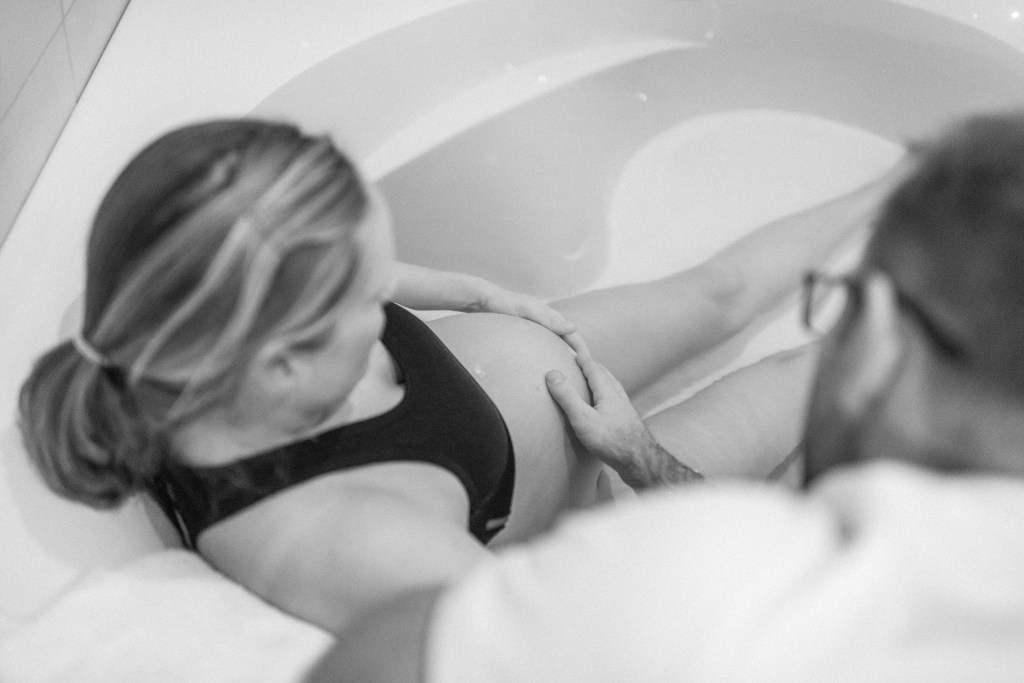
3. Use water
The evidence on whether or not water births prevent tearing is mixed, so this is not at all an evidence-based suggestion. I like evidence, so I almost didn’t put this in as a suggestion. However, I also don’t think there’s sufficient evidence to say that it doesn’t help, and logic tells me that water should be helpful because it keeps the perineum warm and subtle.
A water birth may help for other reasons that are not as direct. In water, it’s easier to move around and so you’re potentially more likely to have an active labour, where you move instinctively to get into the best position for you and your baby. Water has been shown in many studies to reduce pain, which doesn’t in itself reduce the risk of tearing, but reduces the chances of you asking for stronger medical pain relief such as opiates (pethidine, diamorphine) or an epidural. Being able to feel what’s happening will again, mean you’re more likely to act instinctively, both in terms of birth position and breathing and/or pushing. Basically, anything that empowers you to follow your own lead rather than looking to others to tell you what to do will be helpful to the whole birth process, including the part where baby’s head crowns.
Hands on or hands off?
In the last few years a ‘hands on’ approach has become common within NHS care in England. This is where the midwife or doctor would actually place a warm compress on your perineum as baby’s head crowns. The idea is to keep the perineum warm (so it’s more stretchy) and to help control the pace at which baby comes out (slow and steady). One review of several studies (totalling over 7000 women) found that it didn’t help at all, however, there is also a lot of evidence to suggest it does help reduce tears. My personal opinion is that it sounds really invasive to have someone put their hands there and so if I was going to let them, I’d want to have a good reason! If you’d like to delve into the research and pros and cons of this topic further, I’d recommend this podcast.
I would definitely talk to your midwife about this hands on approach and consider whether or not you want it, and put yes please/no thanks of your birth plan. If you do want it, you can’t have it in the birth pool. If you don’t want it, a birth pool might be a nice alternative.
How does hypnobirthing reduce tearing?
Hypnobirthing is all about helping you to stay calm and relaxed during labour, which has incredible benefits for your body. That’s why hypnobirthing has been shown to reduce the time of labour, reduce the need for pain relief, and even reduce the likelihood of major interventions such as assisted delivery and caesarean. Hypnobirthing keeps tension at bay, helping the muscles do their work, helping the ligaments loosen to allow more movement in the pelvis, helping mum to breathe rather than tense up and push.
Hypnobirthing is not magic and I can’t promise it’ll prevent a tear. But the stuff I teach on my course is going to inform and empower you to make decisions that will reduce your chances of tearing (and other things you don’t want) and give you the confidence to birth instinctively.
If you’d like to get prepping for a positive birth, check out my hypnobirthing courses!
Thanks for reading, I hope you found this useful!
Enjoyed this post? Sign up to my newsletter for birth tips and helpful info straight to your inbox!
 Pea in the Pod Hypnobirthing